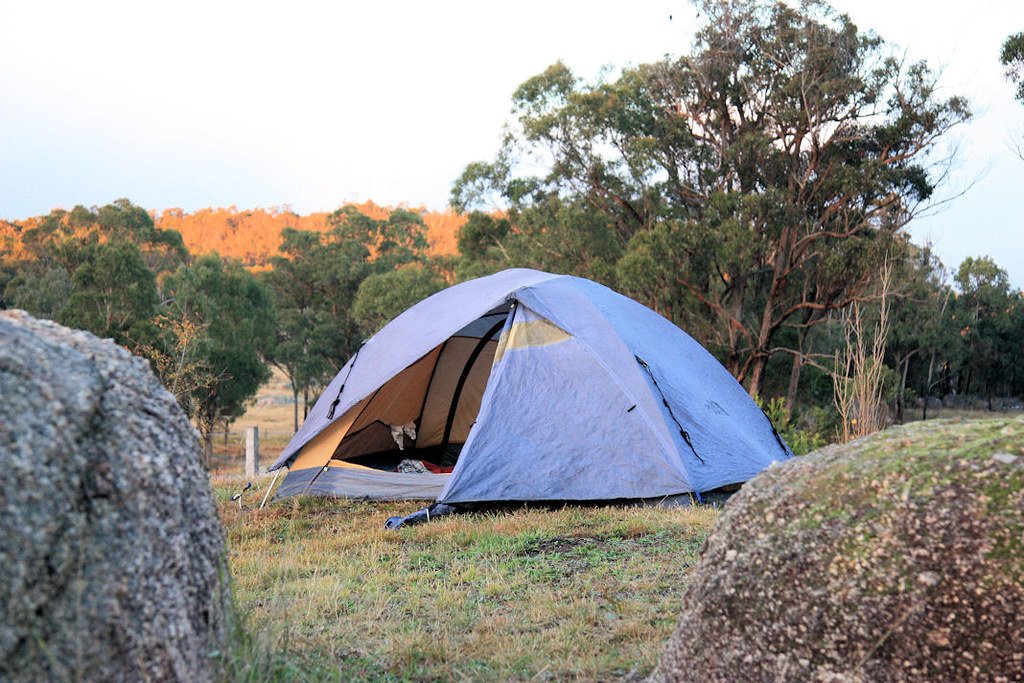
Camping in winter in South East Queensland is all about the nights: that is when it gets cold, and that is what you pack for. Brisbane’s overnight lows average around 10 to 12 °C in June and July, and inland campsites and the ranges are colder, with frost on some mornings.
This guide covers how cold it really gets, how to sleep warm, how to keep a tent safe from carbon monoxide and fire, and which SEQ campgrounds and walks suit a cold-season trip.
How cold does it get camping in winter in SEQ?
The Bureau of Meteorology (BoM) publishes long-term averages for overnight lows (minimum temperatures). These are about figures for July, usually the coldest month. See the BoM climate averages pages for Brisbane, Mount Tamborine and Warwick.
| Place | About, average July overnight low |
|---|---|
| Brisbane | About 10.5 °C (June is about 11.8 °C) |
| Mount Tamborine (515 m) | About 8 °C |
| Warwick (Southern Downs) | About 3 °C |
Averages hide the cold nights. Inland towns and the ranges, especially on the Granite Belt, can drop below zero on clear winter mornings, with frost.
So plan for the coldest night, not the average one. Look at the BoM forecast for the town closest to your campground the day before you leave, and pack for a few degrees colder if your site is in a low, open spot. Cold air settles in low ground on clear, still nights, so a site near a creek can be colder than one on a slope.
Gear for sleeping warm
| Group | What to pack |
|---|---|
| Sleeping bag | A bag whose comfort rating covers the coldest forecast night. Read the comfort number, not the lowest “limit” number. A bag liner adds a little warmth |
| Under you | An insulated mat or a camp mattress with a rug or second mat under it. The cold comes up from the ground, so this matters as much as the bag |
| Tent | A sturdy tent with a fly and a groundsheet. Pitch it out of the wind, and shake out the frost or dew before you pack it |
| Clothes | A thin base layer, a fleece or wool middle layer, and a waterproof and windproof outer. Beanie, gloves and thermal socks. Keep a dry set to sleep in and never wear the day’s damp clothes to bed |
| Light | A head torch each and spare batteries, because it gets dark early in winter and nights are long |
| Warm extras | A thermos, a hot water bottle (fill it with hot water from the kettle, not a stove in the tent), a folding chair and a blanket for around the fire |
Hot, easy meals are the best morale boost in the cold. A one-pot dinner and a hot drink at sunrise go a long way, and our camping food you can make ahead guide has ideas.
Heaters, stoves and carbon monoxide
This is the part of winter camping that can kill people, so read it before you pack a heater. Carbon monoxide is a gas you cannot see or smell, and it builds up in enclosed spaces.
The Queensland Government’s advice is clear: never use a charcoal grill, hibachi, lantern or portable camping stove inside a home, tent or caravan. A Queensland Government gas safety statement says portable LP gas and butane appliances must not be used in tents, caravans, boats or vehicles, because carbon monoxide can build up to lethal levels in confined spaces.
Product Safety Australia has recalled camping butane heaters for exactly this reason: the heaters are made for outdoor use only, and using them against the instructions can cause carbon monoxide poisoning. The recall pages are a good place to check any heater you already own at productsafety.gov.au.
If anyone gets a headache, feels dizzy, weak or sick in a tent or other enclosed space, get everyone into fresh air straight away and seek medical help. In an emergency, call 000.
Campfires in the cold
A fire is the best part of a cold night, but only where it is allowed. The Queensland Government says that where camp fires are allowed you should use the fireplaces and fire rings provided, bring your own clean-milled firewood, never collect wood or kindling in the park, build the fire at least 2 m from tents with no overhanging branches, and never leave it unattended.
Put the fire out with water, not sand, because sand keeps the heat. Do not light a fire during a fire ban or a Queensland Parks fire prohibition. Check the Queensland Fire Department fire bans page before you leave, and read the Queensland Government camp fires page for the full rules. Also read our guide to lighting and keeping a fire.
Where to camp in winter near Brisbane
- Thunderbird Park camping, Tamborine Mountain: about 65 minutes by car from the Brisbane CBD, with a fire pit at every site, shared bathrooms and a camp kitchen. At 515 m the mountain is cooler at night than Brisbane, so bring the warm bag. See Thunderbird Park camping.
- Paradise Country Farmstay, Gold Coast: powered camping and van sites and eco tents, with farm activities, close to the coast. See Paradise Country.
- Queensland national parks and forests: browse the Queensland Government list of camping locations, check each park’s page for facilities, and book before you go. You must book and pay for a camping permit before you arrive, and most bookings go through the Queensland National Parks Booking Service.
Private campgrounds take their own bookings, and rates are higher in school holidays and on long weekends. A first winter trip is easiest at a campground with showers and a camp kitchen close to your tent, within a drive of home.
Cold-season walks to add to a camping trip
Winter days are good for walking. Hiking is more pleasant without the summer heat, and our hiking tips cover what to carry.
- Tamborine Mountain Rainforest Skywalk – a 1.5 km elevated rainforest walk, open 9.30 am to 5 pm, close to Thunderbird Park.
- Natural Bridge, Springbrook – a 1 km rainforest circuit to a rock arch and waterfall. The glow-worms are much reduced in winter, so go for the walk and the waterfall.
Plan a winter camping trip
- Check the forecast. Look at the BoM forecast for the nearest town for the overnight low, and the wind.
- Book early. Winter school holidays and long weekends are busy and cost more at private campgrounds.
- Arrive with daylight. It gets dark early in winter, so set up before dusk and get the fire and the dinner going while it is light.
- Know your rules. Fire bans, fire rings, dogs and noise rules differ by campground. Read our camping etiquette and the Leave No Trace principles.
Going with children? Our camping with kids guide covers booking and safety. Taking the dog? Read camping with dogs. To keep costs down, see camping on a budget. If you are not sure about the cold, try a backyard campout first and find out how your gear copes before you are an hour from home.
Nearby
- Thunderbird Park camping – a Tamborine Mountain campground with fire pits and a camp kitchen.
- Paradise Country, Gold Coast – farmstay camping and animals.
- Tamborine Mountain Rainforest Skywalk – a treetop walk close to the campground.
- Natural Bridge, Springbrook – a short rainforest walk and waterfall.
More ideas: camping.
Quick answers
How cold does it get camping in South East Queensland in winter?
Brisbane’s overnight lows average about 10 to 12 °C in June and July, Mount Tamborine about 8 °C in July and Warwick about 3 °C, and frost and temperatures below zero are possible inland and on the ranges.
What is the coldest month for camping in SEQ?
July has the lowest average overnight temperature, with June close behind.
Can you use a heater in a tent?
No. Queensland Government advice is that gas and fuel appliances, camp stoves and barbecues must not be used inside a tent because carbon monoxide can build up. Warm up with layers, a hot water bottle and a fire outside.
Can you have a campfire in winter in Queensland?
Only in parks that allow it, in the fire rings provided, and never during a fire ban or prohibition. Bring your own clean-milled firewood and do not collect any in the park.
Do you need to book camping in winter?
Yes for national parks and forests: you must book and pay for a camping permit before you arrive. Private campgrounds take their own bookings.
0 Comments