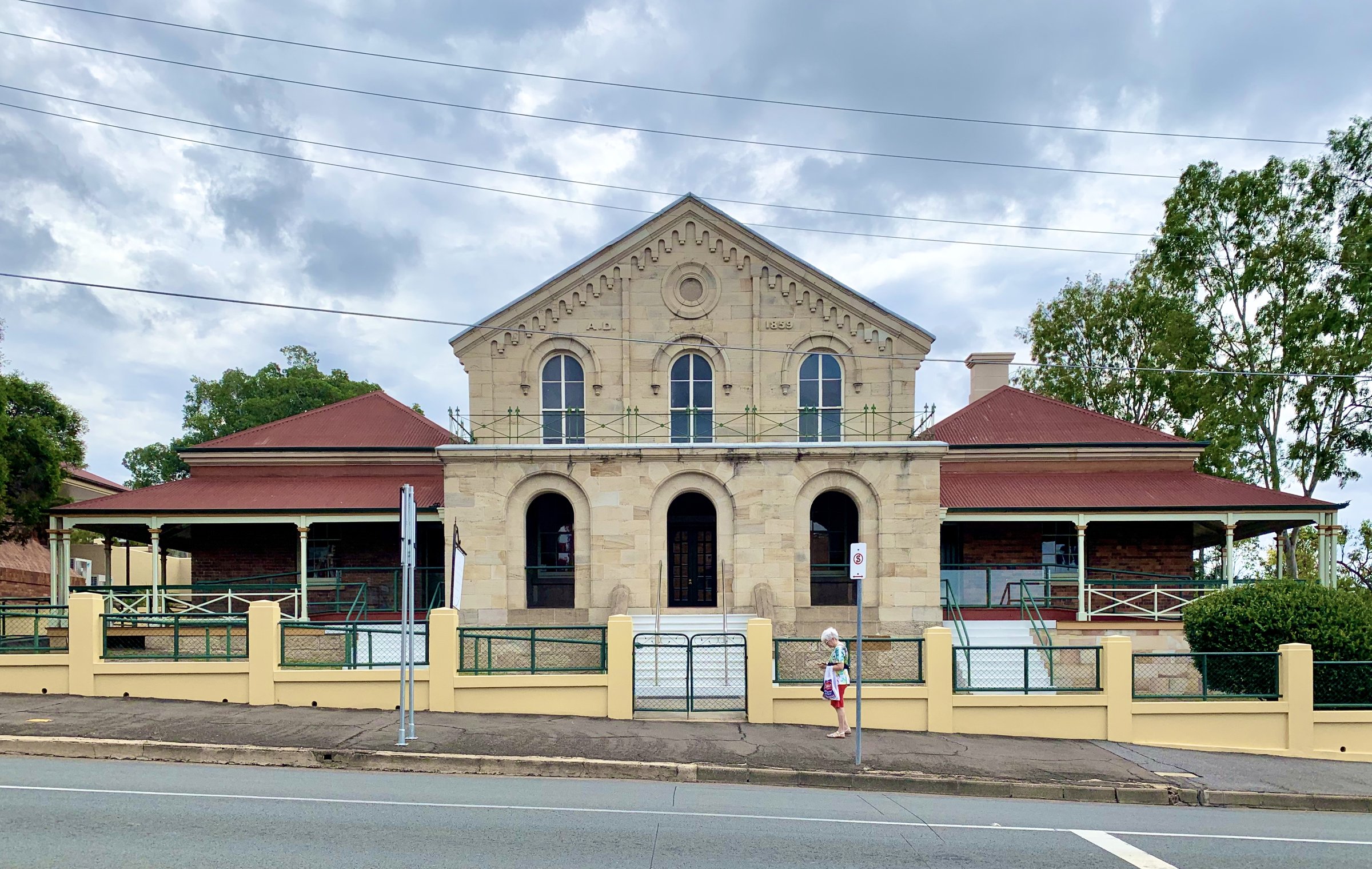
The Old Ipswich Court House is a sandstone and brick courthouse on East Street, built in 1859 and listed on the Queensland Heritage Register. It sits on a busy corner on the edge of the Ipswich CBD, and it is one of the oldest government buildings in the state.
It stopped being the district’s main court in 1982, when a newer courthouse took over. Today the old Ipswich court house is a community cultural centre, and the public can only go inside on open days.
Looking for the current Ipswich courts? They are at the Ipswich Courthouse, 43 Ellenborough Street. Check opening hours and court details on the Queensland Courts website.
The history of the Ipswich Court House
The courthouse was built in 1859 by the New South Wales government, before Queensland became its own colony. Charles Tiffin, the Colonial Architect, drew the design. When Queensland separated it inherited the bill for the building, which started a long argument between the two colonies.
It served as the main court for the district from 1859 until 1982, and it was also used for public meetings in the early years of Ipswich. Early problems with damp and leaking skylights were solved when the skylights were taken out in 1864.
By 1904 it had become too small, and a western extension was added in 1936. The Queensland Government carried out conservation work in the 1970s and 1980s.
What to look at
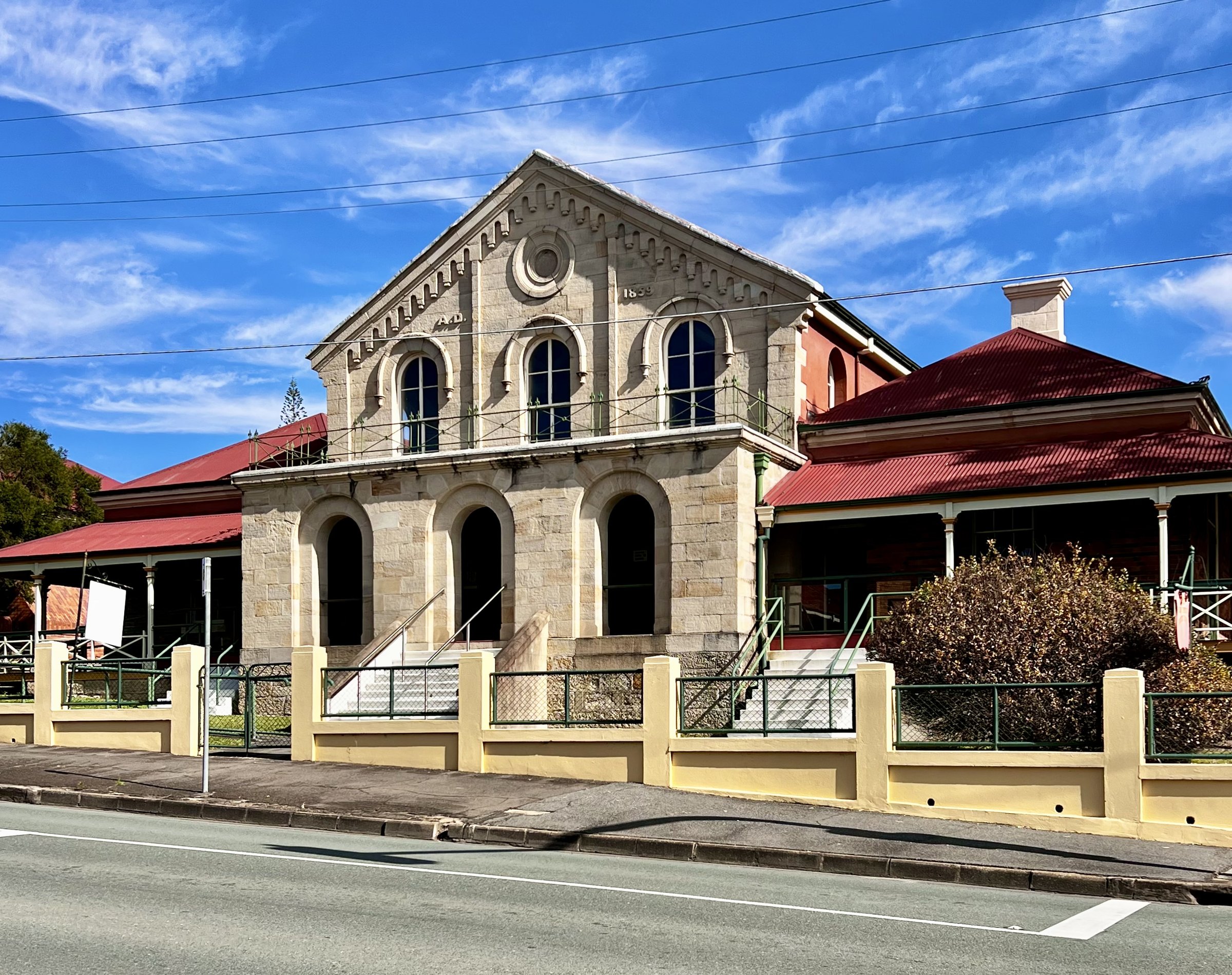
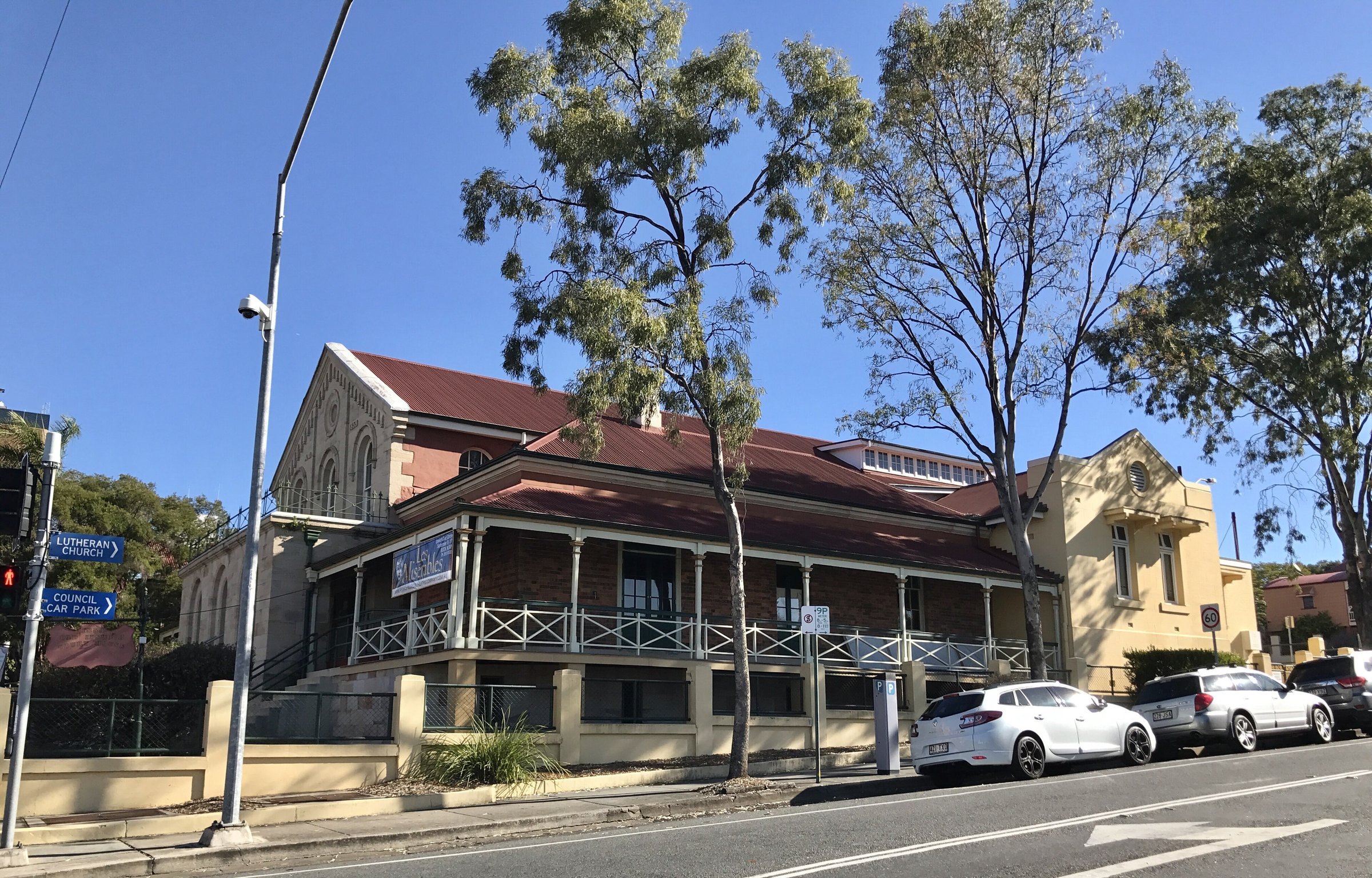
The original courtroom at the front is sandstone, with facebrick side wings. The 1936 western extension is brick with ruled joint render. A rendered brick fence with pipe and chainwire infill encloses the site.
The building is a landmark on a major intersection, in a group of historic buildings at the edge of the Ipswich CBD. Walk around the outside for the sandstone front, the facebrick side wings and the 1936 extension on the western side.
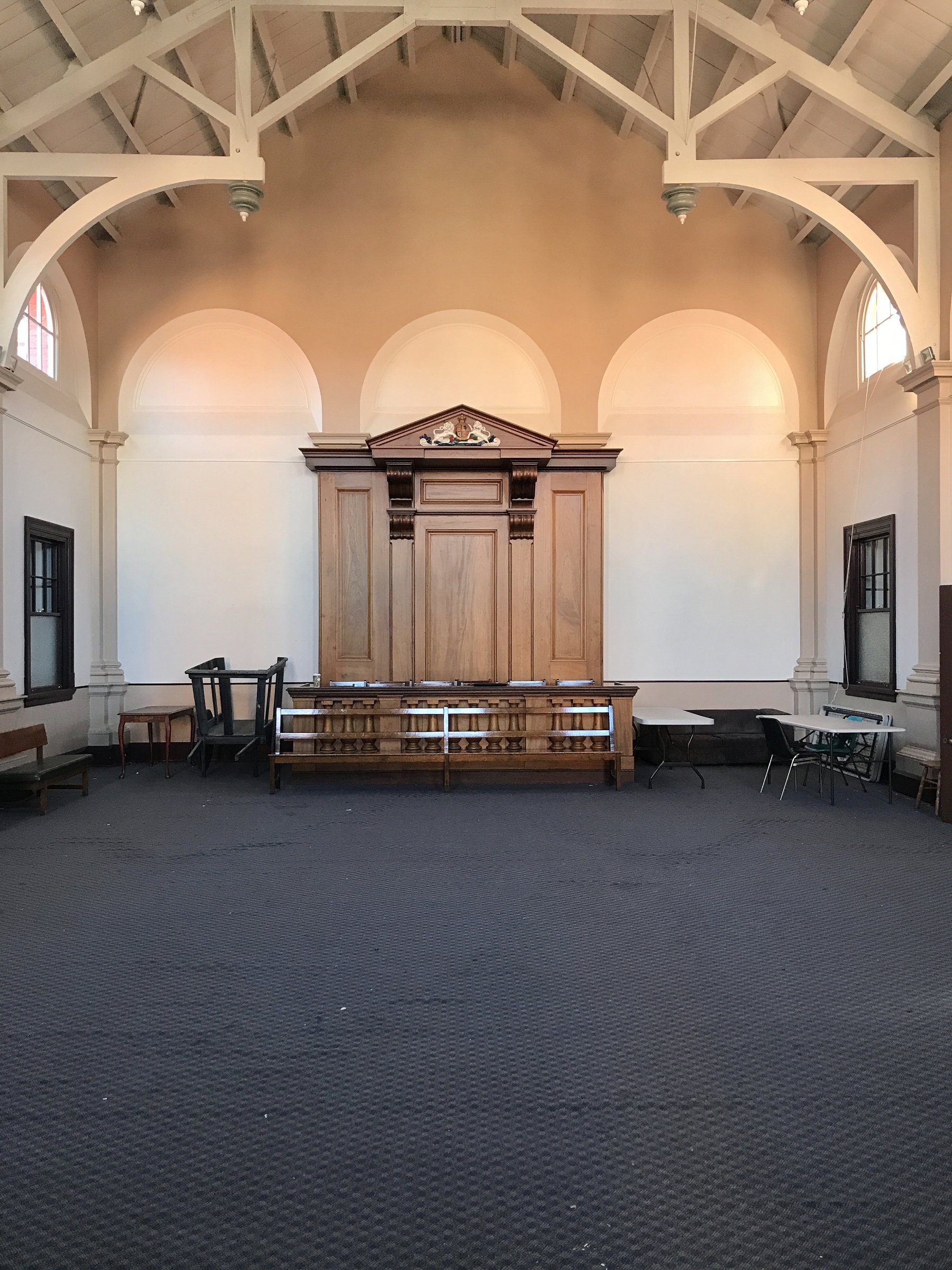
Inside, the original courtroom keeps its early bench and court fittings. When the courts moved out, the bench was moved into the original courtroom and the building became a community cultural centre.
Why the Ipswich Court House matters
The Queensland Heritage Register lists it as a rare example of a government building built in Queensland before Separation from New South Wales. It was Charles Tiffin’s earliest major Queensland work, and he went on to become the first Queensland Colonial Architect.
The style is Romanesque, in sandstone and brick, and it is part of a precinct of historic buildings on the edge of the Ipswich CBD. That makes it a good first stop on a walk around the older part of the city.
Visiting the Old Ipswich Court House
Several community groups use the building as their base, so it is not open like a museum with set daily hours. The public can go inside on open days during Ipswich’s Galvanized: A Festival of Heritage, held in early September. The open days listed for 2024 (1 September) and 2025 (6 September) were free, with guided tours of the building, displays and performances from the groups based there, and Devonshire teas for sale.
The community groups listed for the 2025 open day were the Ipswich Art Society, Ipswich Mini-Crafters, Ipswich Musical Theatre Company, Ipswich Photographic Society and the Miner Chords, so expect displays and performances rather than a formal museum tour.
The event listings say disabled access is available, but contact the organiser for details.
Planning your visit
- How long: 20 to 30 minutes for the outside and a look around the corner; allow more on an open day with tours.
- Cost: free on the Galvanized festival open days listed so far.
- Best time: an open day, so you can see inside.
- Combine it with: a walk through the Ipswich CBD, Queens Park or the Workshops Rail Museum.
Getting there and parking
The Old Ipswich Court House is at 75 East Street, Ipswich, on the corner of East and Roderick Streets. It is about 40 minutes by car from the Brisbane CBD (about 39 km).
Plan a public transport trip with the Translink Journey Planner or call 13 12 30. Details can change, so check the Ipswich City Council website and event listings before you go.
Nearby
- Workshops Rail Museum – the big railway museum in Ipswich, good for kids.
- Queens Park Ipswich – playground, nature centre and cafe.
- Ipswich Nature Centre – free animals in Queens Park.
- Nerima Gardens – a Japanese garden in Ipswich.
- St Nicholas Precinct – Christmas in Ipswich.
Browse more history and landmarks and things to do in Ipswich.
You might also like
- Sandgate Town Hall – its clock came from the old Ipswich Town Hall.
- Graceville Memorial Park (Brisbane)
- Walter Taylor Bridge (Indooroopilly)
Quick answers
Is the Old Ipswich Court House still a working court?
No. It was the district’s main court until 1982, and the current Ipswich Courthouse is at 43 Ellenborough Street. The old building is now a community cultural centre.
When was the Ipswich Court House built?
The original section was finished in 1859, with a western extension added in 1936.
Can you go inside the Old Ipswich Court House?
Yes, on open days such as the free tour day held during Ipswich’s Galvanized festival each September. It is not open daily like a museum.
Where is the Ipswich Court House?
The heritage building is at 75 East Street, on the corner of East and Roderick Streets in Ipswich.
How far is it from Brisbane?
About 40 minutes by car from the Brisbane CBD.



0 Comments