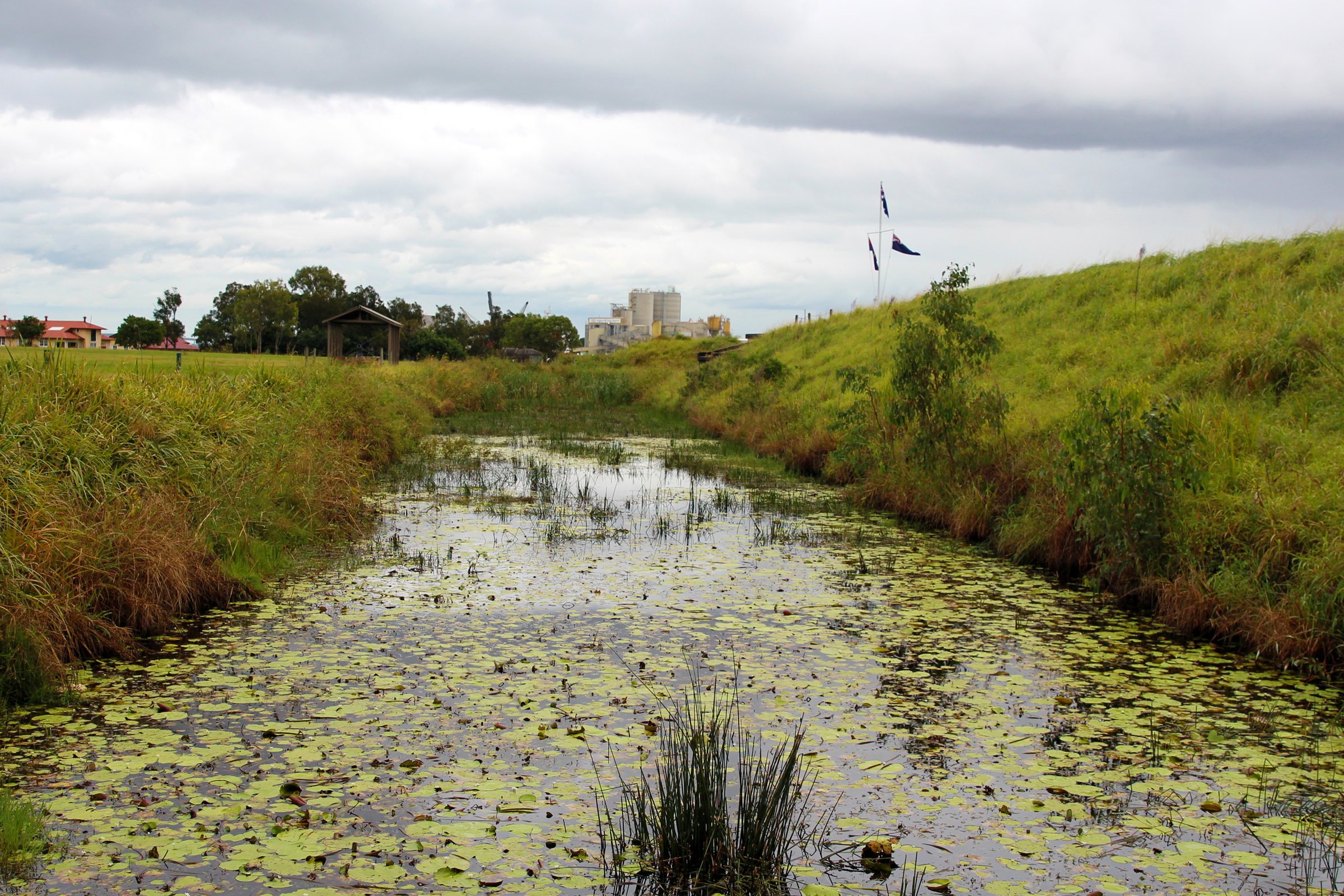
Fort Lytton National Park is a historic fort on the southern bank of the Brisbane River at Lytton, about 19 km from the Brisbane CBD, and it is free to visit on its open days. It was built in 1880 to 1881 to protect the city and port from naval attack, and it is ringed by a moat.
You can wander the grounds with a brochure, join a free guided tour, look through the military museum and have a picnic by the river. The fort only opens on set days, so check before you drive out.
When is Fort Lytton National Park open?
Fort Lytton is open to the public on Sundays, usually from 10 am to 4 pm, and on some public holidays and special event days. Other days are by appointment only, with fees. Opening days can change, so check the fort’s website or the Queensland Parks page for the day you plan to go.
Entry and parking are free, and gold coin donations are welcome. Free guided tours run on open days, and you can also explore on your own with a self-guided trail brochure.
What to see at Fort Lytton
The fort and its guns
The fort is ringed by a moat and sits beside the river, with historic guns on show, including 64-pounder guns and a six-inch Armstrong disappearing gun. Two parts of the fort, the submarine mining building and the black powder rooms, can only be entered on a guided tour.
The military museum
The Queensland Military Historical Society runs a museum in the Old Dining Hall, with more than 10,000 artefacts. The Society moved into the Old Dining Hall in 2019, so the collection is now housed inside the historic fort grounds. Entry to the museum is free and it opens whenever the park does.
Tours and special days
Free guided tours run throughout the open day, and you can join part-way through. They depend on volunteer guides, so ask at the entrance for the next one.
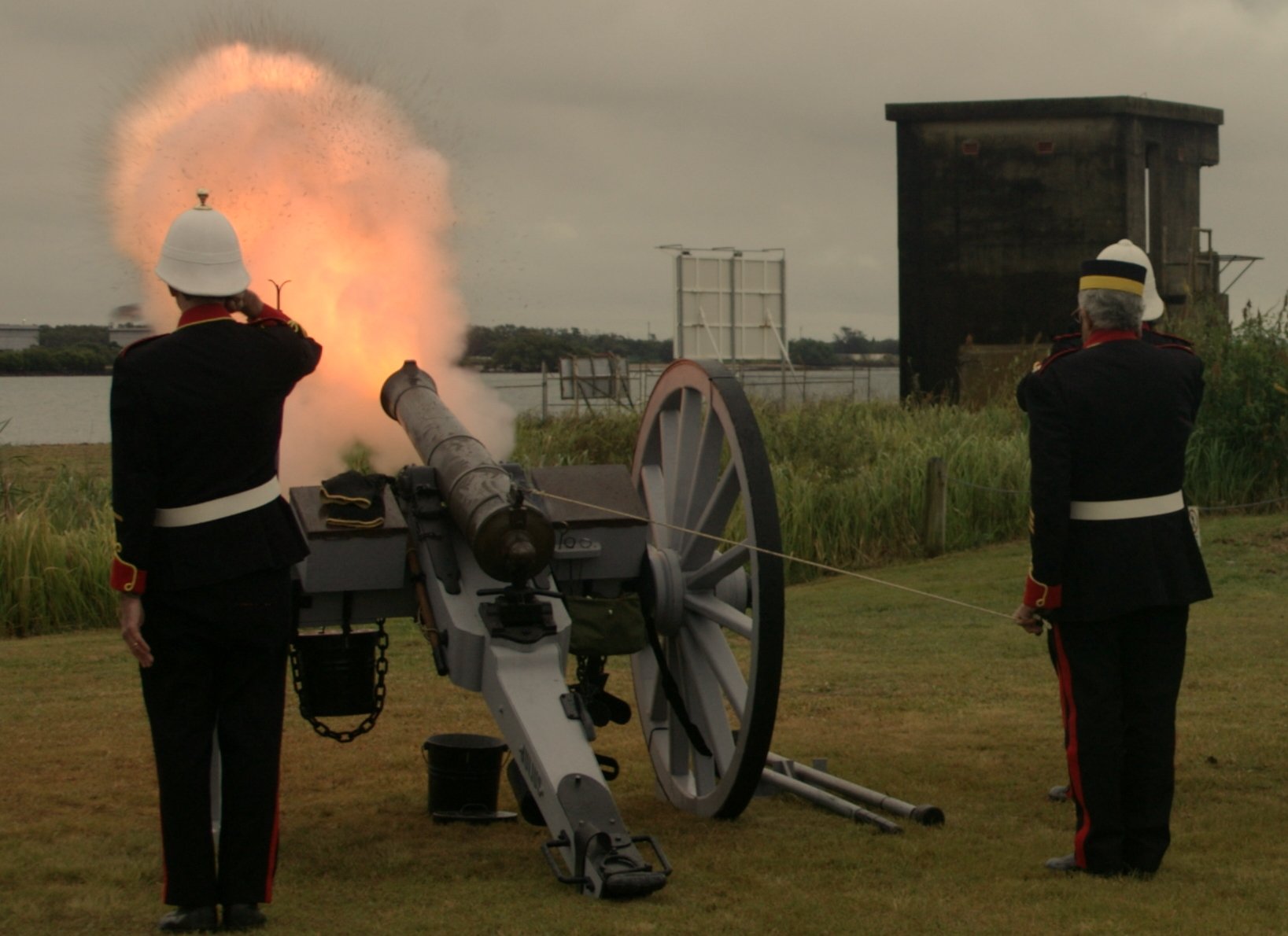
The fort also runs special days such as re-enactments and gun firing. Dates are on the fort’s website.
A short history of Fort Lytton
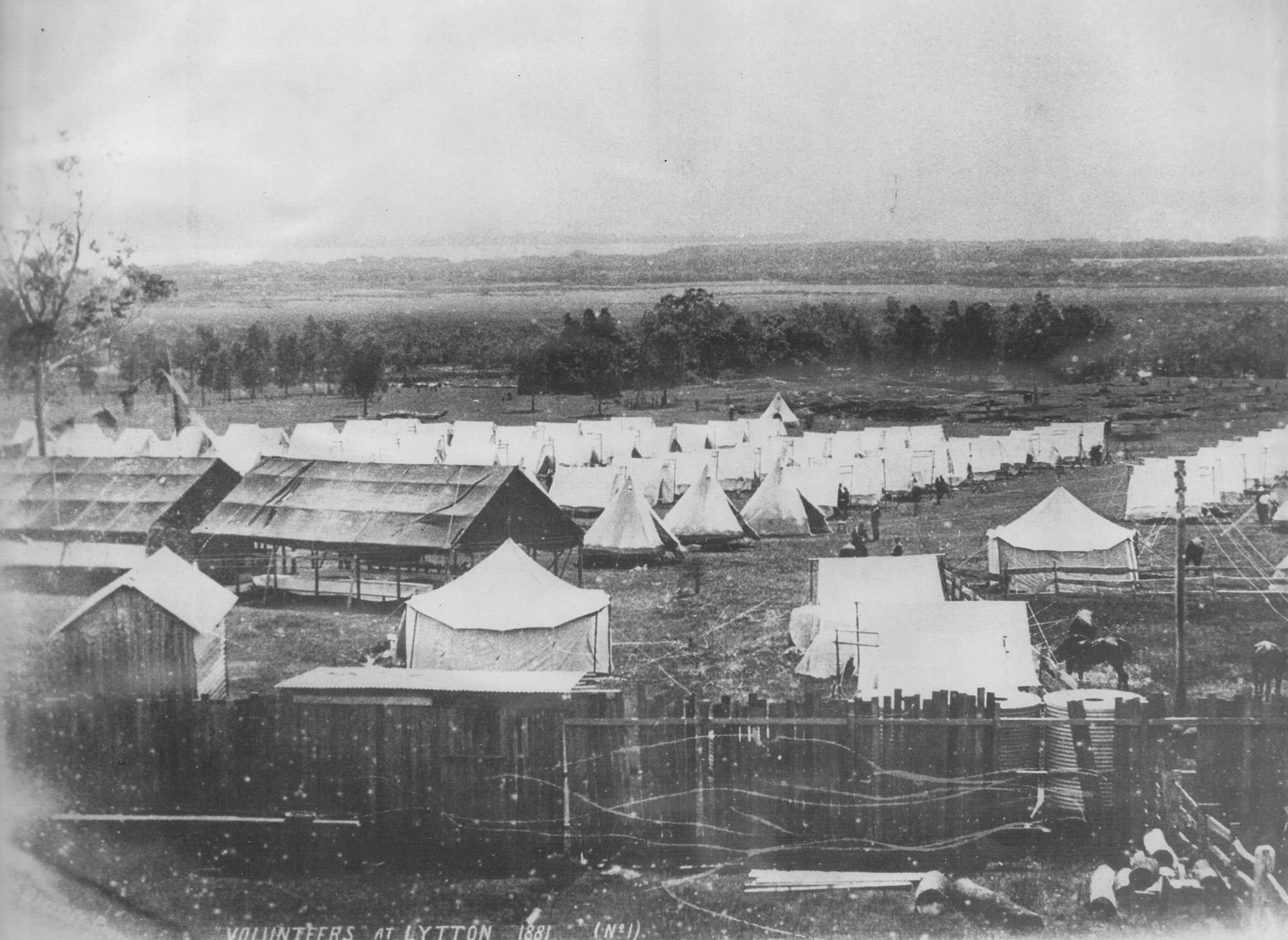
Soon after it was built the fort became the setting for volunteer soldiers’ training. The first Easter encampment was held here in 1881, and it was the first of about forty annual Easter encampments at Lytton. The photo below shows that first camp, with rows of tents and timber huts, looking out over the surrounding flat country.
After federation in 1901 the fort passed to the Commonwealth and stayed a military base until shortly after World War II. Its last job was as a signal station, which closed in 1965. Ampol bought the surrounding land in 1963 for an oil refinery, and in 1988 the original fort block was transferred to the Queensland Government. The park was created in 1990 as Queensland’s first historic national park.
The nearby Lytton Quarantine Station, set up in 1913 to 1914, was added to the park in 1999. It is only open on special occasions, but you can walk around the outside of the buildings at any time.
Planning your visit
- How long: a couple of hours for a stroll and the museum, or longer with a tour and a picnic.
- Food: the canteen sells hot and cold drinks (cash only), and there is a shady picnic area by the river if you bring your own food.
- Toilets: there are toilets, including wheelchair-accessible ones.
- Cost: free entry, parking and tours (gold coin donations welcome).
- Accessibility: the grass pathways make wheelchairs and prams difficult.
Getting there and parking
The fort is at 160 South Street, Lytton. By car it is about 19 km and about 30 minutes from the Brisbane CBD. There is plenty of free parking on site.
There is no public transport to the park. The nearest train station is Wynnum North, so plan your trip with the Translink Journey Planner or call 13 12 30.
Nearby
- Wynnum – the foreshore, jetty and wading pool for the rest of the day out.
- Wynnum Wading Pool – a tidal pool, whale water park and playground.
- Nudgee Beach – mangroves and a boardwalk on the other side of the river.
- The Old Windmill, Brisbane – another piece of the city’s early history.
Browse more history and landmarks or things to do in Brisbane.
You might also like
- Point Danger (Coolangatta)
- Bulimba Memorial Park (Brisbane)
- Teneriffe (Brisbane)
Quick answers
Is Fort Lytton National Park free?
Yes. Entry, parking and guided tours are free on open days, and gold coin donations are welcome.
What days is Fort Lytton open?
Sundays, usually 10 am to 4 pm, and some public holidays and special days. Other days are by appointment only, so check before you go.
Do you need to book a tour at Fort Lytton?
Free guided tours run on open days and you can join part-way through. They depend on volunteer guides.
Is there food at Fort Lytton?
The canteen sells hot and cold drinks (cash only), and there is a shady picnic area by the river for your own food.
Can you get to Fort Lytton by public transport?
No public transport goes to the park. The nearest train station is Wynnum North, so check the Translink journey planner.
Is Fort Lytton good for prams and wheelchairs?
The grass pathways make wheelchairs and prams difficult, but the toilets are wheelchair accessible.
0 Comments